Flying with a dog: what to know before air travel
July 29, 2026

Katka
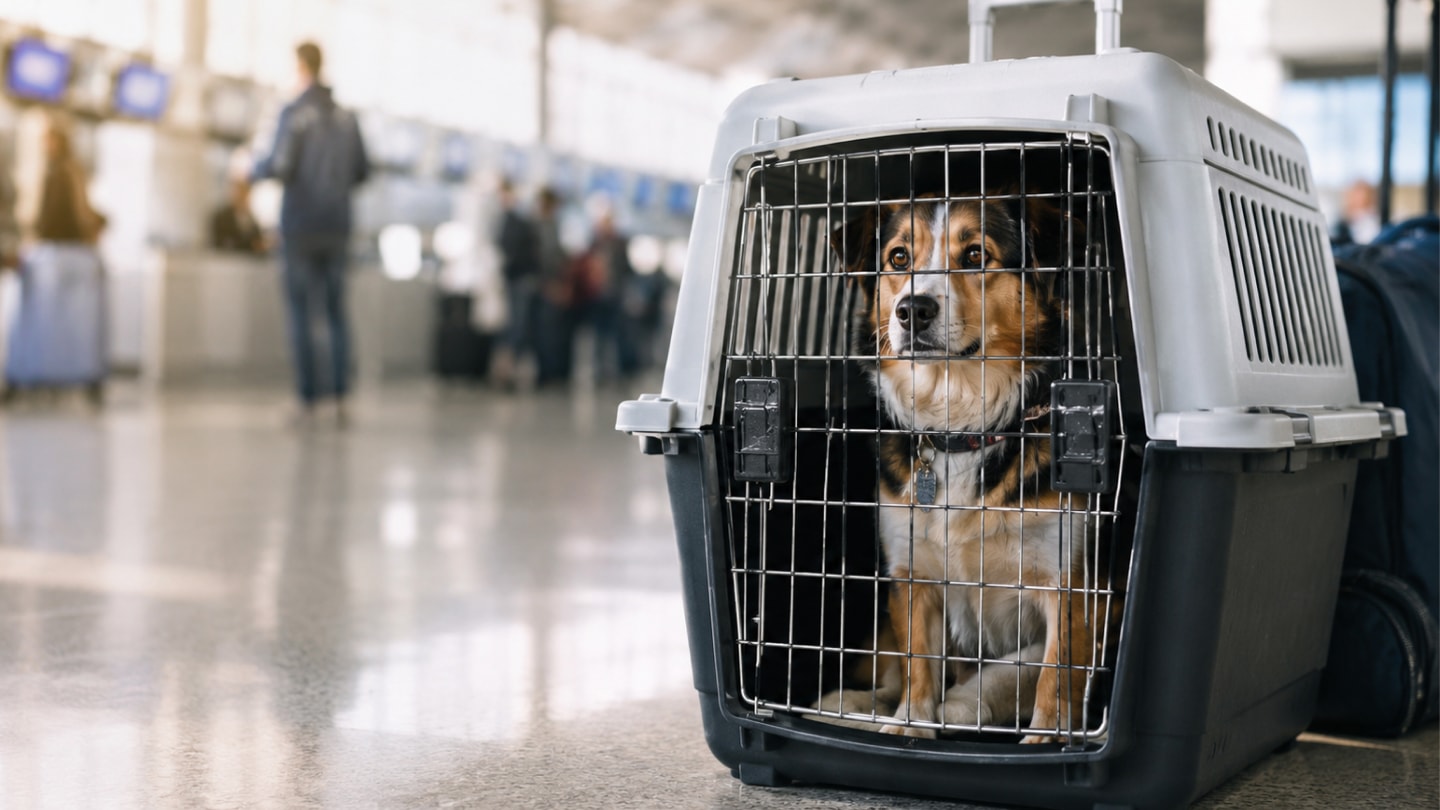
Flying with a dog can be simple in some cases and very stressful in others. A small, calm dog on a short direct flight is a completely different situation from a large dog flying internationally in cargo with multiple documents, seasonal restrictions, and airline-specific rules.
That is why the most important question is not only “Can my dog fly?” but also “Should my dog fly?” In this guide, we will walk through how air travel with dogs works, when it makes sense, what to prepare, and what to think twice about before you book anything.
If you are also trying to figure out how your dog handles new environments or time alone in accommodation after arrival, Barkio can help you check in remotely and spot stress signals earlier.

Can dogs fly on a plane?
Yes, many dogs can fly, but the conditions vary a lot.
In practice, dogs usually travel in one of these ways:
- In the cabin: Usually smaller dogs that fit in an airline-approved carrier under the seat.
- In the cargo hold on the same flight: Often the only option for larger dogs.
- As manifest cargo: More common for relocations, longer-distance travel, or when the dog is not traveling under the same passenger booking.
There is one more important distinction: a pet is not the same as a service animal. Airlines and regulators usually treat these categories differently, so always read the right rules for your case.
Yes, many dogs can fly, but the conditions vary a lot.
In practice, dogs usually travel either in the cabin, in the cargo hold on the same flight, or as manifest cargo.
Cabin travel is typically limited to smaller dogs that fit in an airline-approved carrier under the seat. Larger dogs often have to travel in cargo, while manifest cargo is more common for relocations, long-distance moves, or cases where the dog is not traveling under the same passenger booking.
There is one more important distinction: a pet is not the same as a service animal. Airlines and regulators usually treat these categories differently, so always read the right rules for your case.
When flying may not be the best idea
Some dogs tolerate air travel well. Others do not.
Flying may be a poor choice if your dog is:
- extremely anxious in new environments,
- medically fragile,
- very old or very young,
- poorly crate-trained,
- a short-nosed breed with breathing risks,
- likely to face a long route with multiple transfers.
Put welfare first! If the journey is likely to overwhelm your dog, leaving them at home with trusted care may be the kinder option.
This matters even more for brachycephalic dogs. The U.S. Department of Transportation notes that many airlines do not carry short-nosed breeds because of breathing risks, and USDA guidance also highlights extra care for these dogs during air travel.
What to check before you book
Many problems start long before the airport. The easiest way to avoid them is to verify the basics before paying for a ticket.
1. Airline pet policy
Never assume that one airline works like another. Policies can vary on whether dogs are allowed in the cabin, what size and weight limits apply, which carrier dimensions are accepted, whether there are age minimums or breed restrictions, whether seasonal cargo embargoes apply, how early you must check in, and how much pet travel actually costs once all fees are included.
Before you book, make sure you have checked the practical basics: cabin availability, carrier size limits, breed restrictions, seasonal temperature embargoes, airport check-in timing, and total pet fees.
The U.S. Department of Transportation says airlines often publish separate pet fees and optional service charges on their websites, so it is worth checking the exact page for your carrier before booking.
2. Route and layovers
Direct flights are usually easier on dogs than itineraries with connections. Fewer transfers mean less handling, less waiting, and less chance of delays, missed flights, or being separated from your dog’s paperwork or crate.
If you have a choice, try to avoid very short layovers, overnight transfers, extreme temperatures, and busy holiday dates. These details may seem minor on paper, but they can make a big difference in how predictable and manageable the trip feels for your dog.
3. Entry rules at your destination
The airline is only part of the puzzle. Your destination country may have its own microchip, vaccination, health certificate, treatment, or quarantine requirements.
For example:
- The EU requires pet travel rules such as microchipping and rabies vaccination, and in many cases dogs entering from non-EU countries need an EU animal health certificate.
- The U.S. CDC says entry requirements depend on where your dog was vaccinated and which countries your dog has been in during the previous 6 months.
This is why your return trip matters too, not only the outbound flight.
Documents you may need
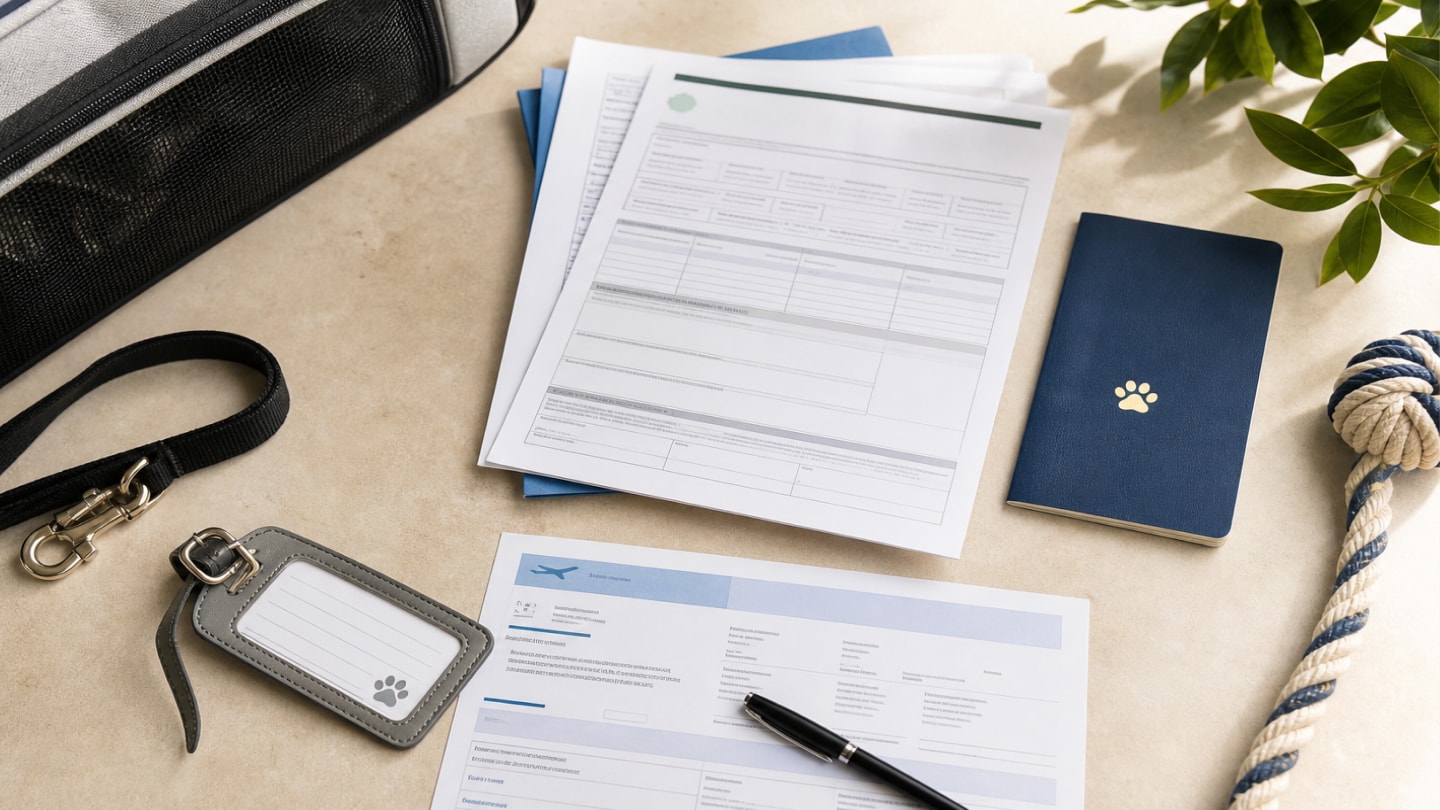
The exact list depends on the airline, route, and destination, but these are the most common items to expect:
- microchip documentation,
- rabies vaccination record,
- health certificate,
- import permit if required,
- destination-specific declarations or treatment records,
- booking confirmation for your dog,
- your contact details attached to the carrier or crate.
Travel to the EU
According to current EU guidance, dogs traveling under the standard pet rules generally need:
- a microchip,
- a valid rabies vaccination,
- a pet passport for certain intra-EU travel or an EU animal health certificate when entering from a non-EU country.
The EU also states that after a first rabies vaccination, you usually need to wait at least 21 days before travel. If entering from some non-EU countries, a rabies antibody titration test may also be required.
If you are entering the EU from outside the bloc, the EU says you may need to use a designated travelers’ point of entry where your dog’s identity and documents are checked.
Travel to or back into the U.S.
If your trip includes the United States, current CDC rules matter a lot. The CDC says requirements depend on the dog’s vaccination status and which countries the dog has been in during the previous 6 months. The CDC also provides a Dog Importation Navigator to determine what applies in a specific case.
Rules change fast always verify destination and return-entry requirements close to departure, even if you have traveled the same route before.
Cabin vs cargo: which is better?
For most owners, cabin travel feels more reassuring because the dog stays with you. If your dog fits the airline’s size limits and handles confinement well, cabin travel is often the least stressful option.
For larger dogs, cargo may be the only realistic option. That does not automatically mean it is unsafe, but it does mean preparation matters much more:
- choose an airline with a clear pet policy,
- prefer direct flights,
- avoid extreme temperatures,
- use a compliant crate,
- make sure your dog is healthy and calm enough to fly.
USDA air travel guidance also emphasizes that crate quality, ventilation, labeling, and health readiness are essential.
How to prepare your dog for flying
The most useful preparation usually starts weeks before the trip, not the night before.
Choose the right crate for air travel
For cabin travel, you will usually need a carrier that fits under the seat and matches the airline’s size rules.
For cargo travel, USDA guidance highlights several basics. The kennel should:
- be hard-sided,
- have secure fasteners,
- offer adequate ventilation,
- include a leak-proof floor,
- have food and water dishes accessible from outside,
- be clearly labeled as a live animal.
The crate must also be large enough for your dog to stand up, turn around, sit naturally, and lie down comfortably.
Get your dog comfortable with the carrier or crate
If the crate only appears on travel day, many dogs will see it as a warning sign. Start early and build positive associations:
- leave the crate open at home,
- feed meals inside it,
- add a blanket with a familiar scent,
- practice short closed-door sessions,
- reward calm behavior, not frantic behavior.
Your goal is not just crate tolerance. Your goal is for the dog to feel safe enough to rest there.
Practice calm routines
Dogs do better when the process feels familiar. Practice:
- waiting calmly,
- going in and out of the crate,
- short car rides to neutral or pleasant places,
- settling after activity,
- staying relaxed around airport-like noise and movement.
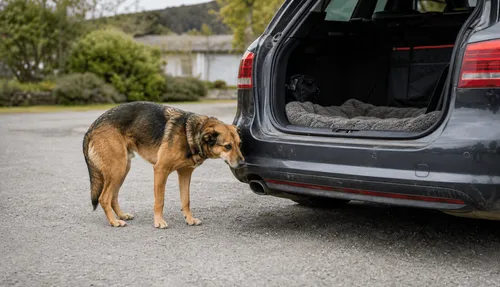
If your dog already struggles with car travel, that is worth addressing too, because airport day usually starts with a car ride.
The travel day and first hours after arrival
A calm, practical routine usually works better than trying to do everything perfectly.
What to do on flight day
Before leaving for the airport:
- give your dog a chance to exercise and toilet,
- keep feeding sensible and timed well before the flight,
- make sure water is available,
- recheck all documents,
- arrive early enough for pet check-in procedures.
Just as importantly, keep your own energy calm and steady. Dogs often pick up on tension long before anything visibly stressful happens.
Ask your veterinarian what makes sense for your dog specifically. That is especially important if your dog has anxiety, a medical condition, or a history of motion sickness.
After you land
Landing is not the end of the stress for every dog. Some dogs need time to decompress after the airport, the noise, the crate, and the new environment.
Once you arrive, offer water, allow a calm toilet break, watch for overheating, diarrhea, drooling, or unusual distress, and keep the first few hours as quiet as possible.
If your dog will be resting in a hotel, apartment, or relative’s home after the flight, monitoring can be very useful. A dog may look fine when you arrive and then start panting, whining, or pacing once the environment settles.
When it may be better to leave your dog at home
Not every trip should include your dog. Sometimes the best plan is the one that avoids unnecessary stress.
That may be the better choice if:
- the trip is very short,
- the route is long or complicated,
- your dog is highly sensitive,
- the destination is not dog-friendly,
- the flight would require stressful cargo travel your dog is unlikely to cope with well.
If you decide not to take your dog, Barkio can help you stay connected while they are with a trusted sitter or resting at home.
If you are planning the full trip, you can also continue with our broader guide to traveling with dog.
Frequently asked questions
1. Can dogs fly in the cabin?
Many can, but usually only if they are small enough to fit in an airline-approved carrier under the seat. The exact limits depend on the airline.
2. Is flying in cargo safe for dogs?
It can be done safely, but it is more demanding and not ideal for every dog. Airline policy, weather, crate quality, the dog’s health, and direct routing all matter.
3. What documents do I need to fly with my dog?
This depends on the route, but common requirements include a microchip record, rabies vaccination record, health certificate, and destination-specific import documents.
4. How early should I start preparing my dog for a flight?
Ideally several weeks in advance, especially for crate training and calm routine practice.
5. Can I fly internationally with a puppy?
Sometimes, but age, vaccination timing, airline rules, and country-specific entry rules can make this complicated. For example, the EU says a first rabies vaccination is generally followed by a waiting period before travel.
6. What if I am returning to the U.S. with my dog?
The CDC says current U.S. requirements depend on where your dog has been during the previous 6 months and where it was vaccinated, so check the CDC tool before you travel.
Official sources worth checking before you fly
- USDA APHIS: Preparing Pets for Air Travel
- U.S. Department of Transportation: Flying with a Pet
- CDC: Bringing a Dog into the U.S.
- Your Europe: Travelling with pets and other animals in the EU
- IATA: Traveling with Pets
- IATA update from July 15, 2026 on in-cabin pet travel guidance
Conclusion
Flying with a dog can work well, but only when the route, the dog, and the preparation all fit together. The best decision is not always the most convenient one for the owner. It is the one your dog can handle safely and with the least stress.
If you plan early, check the official rules, train the crate properly, and stay honest about your dog’s temperament, you will make a much better decision, whether that means booking the flight or choosing a gentler alternative.