Dog afraid of car rides: what to do about it
May 27, 2026

Katka
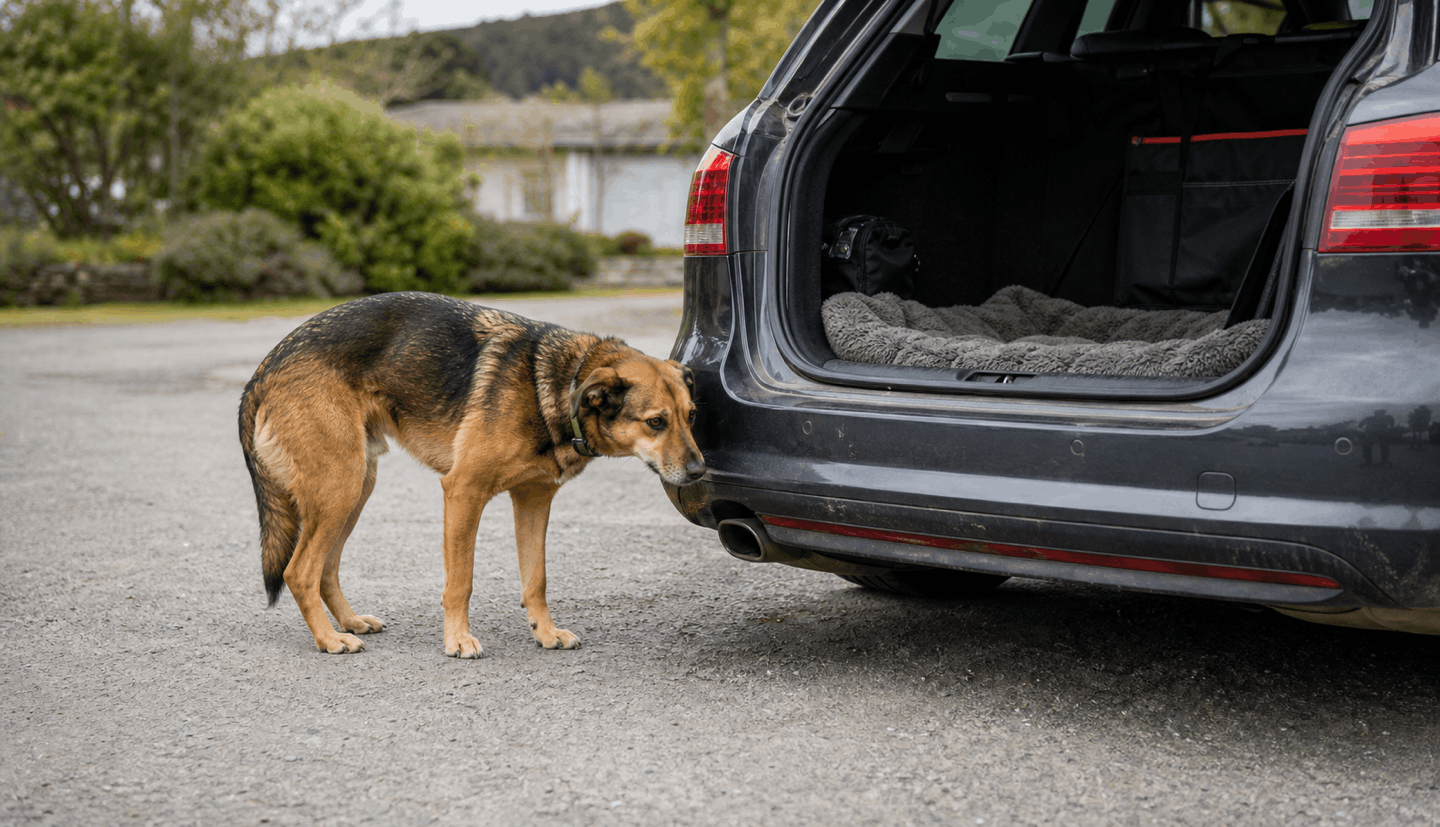
Some dogs jump into the car with enthusiasm, while others stop at the open doors, start to tremble, drool, or completely refuse to get in. If your dog is afraid of riding in the car, it is not stubbornness or naughtiness. In most cases, it is due to stress, a bad experience, motion sickness, or a combination of several factors at once.
The good news is that this can be worked on. The key is not to "force" the dog into the car, but to understand why it dislikes the journey and then to proceed in small steps. That’s exactly what we will demonstrate in this article.
Traveling can be stressful not only for dogs, but for owners too. With Barkio, you can check on your dog remotely and make sure they feel safe and comfortable wherever your journey takes you.

Dog in the car: fear or motion sickness?
This is the first question to ask yourself. Many owners think that the dog "is afraid of the car," but the main problem may actually be that the dog is feeling unwell in the car. Sometimes both may apply: the dog feels sick during a ride once, and next time it fears the car just by looking at it.
Typical signs of stress or fear:
- the dog does not want to approach the car at all,
- it stiffens, tucks its tail, and licks its lips,
- it trembles, whines, or breathes heavily,
- it is restless even before starting the engine,
- along the way, it is overly alert and unable to lie down.
Typical signs of motion sickness in the car:
- excessive drooling,
- frequent swallowing or licking,
- restlessness and pacing during the ride,
- vomiting,
- diarrhea or the need to go out immediately after stopping.
Note: In puppies, motion sickness in the car is more common than in adult dogs. However, if the dog suddenly becomes afraid of cars in adulthood, it is good to also consider pain, balance issues, or another health reason and discuss it with a veterinarian.
Why are some dogs afraid of riding in the car?
The reason is rarely just one. Most often, several factors come together that the dog associates into one unpleasant experience.
1. The dog feels unwell during the car ride
Motion sickness is a common reason why a dog drools, whines, or vomits in the car. If this happens repeatedly, the dog starts to associate the car with discomfort, leading to a vicious cycle: the car means motion sickness, motion sickness means stress, and stress makes everything worse.
2. The dog only associates the car with unpleasant destinations
Many dogs travel in the car mainly to the veterinarian, to the groomer, or to places they do not like. It’s no wonder they don’t want to get in. From their perspective, the car brings nothing good.
3. They are disturbed by noise, vibration, and movement
Engine noise, door closing, wipers, reversing, floor vibrations, or a slippery surface in the trunk. For a sensitive dog, a car can be filled with things that unsettle it. Similarly to fear of noise, gradual desensitization can often help here.
4. They have had a bad experience
Just one rough ride, an accident, vomiting, slipping while getting in, or being forced into the car can lead the dog to remember that situation very vividly.
5. They don’t feel stable and safe
A loosely moving dog tends to be more insecure in the car. A sliding blanket, an unstable seat, or constant shifting while turning increases stress. Many dogs only start feeling better when they have a clearly defined and safe place in the car.
"When a dog is afraid of the car, we don't address disobedience. We address the emotion that it has associated with the car."
What to do When your dog is afraid of riding in the car
Paradoxically, the fastest route is often the slowest. The more you push the dog into a situation it can’t handle, the more its fear solidifies. Gradual desensitization and positive associations work much better.
1. Start outside of the ride
If your dog won’t even approach the car, don’t start with the ride. Begin just by being near the parked car without anything happening.
- Approach the car and give a treat.
- Walk away while the dog is still calm.
- Repeat several times over a few days.
The goal is for the dog not to experience the whole problem at once. First, it needs to feel good just being near the car.
2. Open doors without pressure
The next step is to open the doors or trunk and let the dog explore at its own pace. Don’t pull it in with the leash or force it in unless absolutely necessary.
- Reward interest in the car.
- Praise simply for coming closer.
- If it takes a treat and remains relaxed, you are at the right level.
If the dog stops eating, pulls away, or stiffens, you're moving too fast.
3. Getting in without the engine running
Once the dog is comfortable outside the car, proceed to let it sit inside for a bit. But still, no starting the engine or moving.
- Place a non-slip mat or blanket inside.
- Add a favorite toy or something to lick.
- Allow it to get in, reward it, and then let it out again.
Sometimes this is a phase for one day, other times for a week. Both are fine.
4. Start the engine, but don’t go anywhere
For some dogs, the sound of the engine and vibrations are the most challenging part. Only when it can sit in the car calmly, try starting the engine briefly.
- Start the engine.
- Give a few treats.
- After half a minute, turn the engine off.
- Get out.
This allows the dog to realize that starting the engine doesn’t mean a long uncomfortable journey.
5. Very short rides
Only then comes the actual ride. Not half an hour right away, but perhaps just to the end of the street and back.
- Make the first rides very short.
- Ideally, go to a pleasant place: a meadow, a park, a short walk.
- Don’t plan the vet as the first destination.
This is often a turning point. The dog begins to associate traveling in the car with something it enjoys.
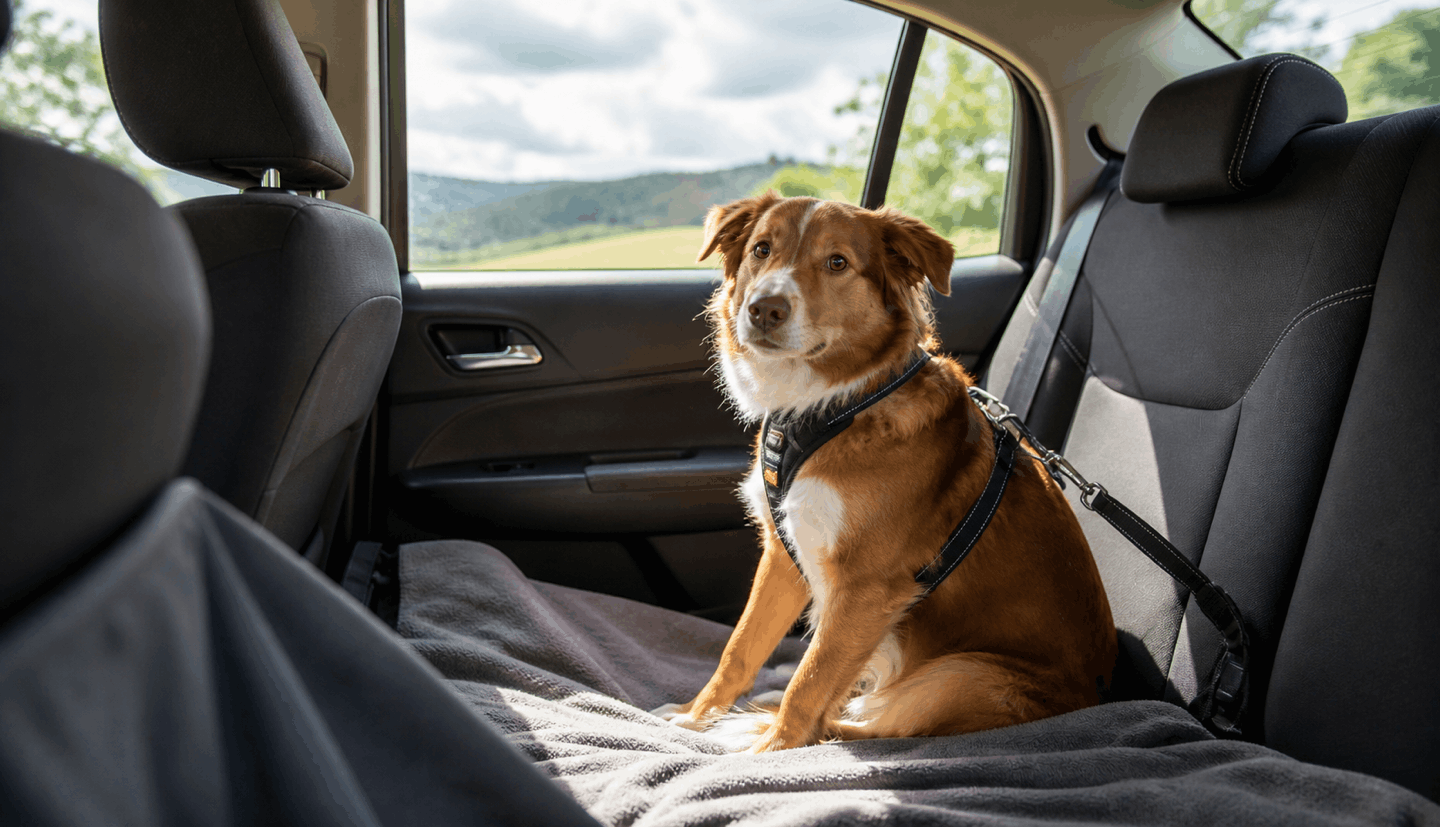
6. Physically assist your dog
When the dog is stable and comfortable in the car, it usually handles the situation much better.
Helpful items:
- secure crate,
- quality car harness,
- booster seat for small dogs,
- non-slip mat,
- a cooler and well-ventilated car.
Safe travel with a dog isn’t only important for accident reasons. A well-arranged space also reduces stress itself.
If you want to go through the transportation process in more detail, you can refer to the article Dog in the car: safety, equipment, and regulations.
7. Do not feed a large portion before traveling
If the dog tends to feel sick in the car, leave a larger gap between feeding and the ride. For more sensitive dogs, this can make a big difference. Always have water handy, and for longer trips, plan breaks.
If you are also dealing with overheating during summer trips, read the article How to cool your dog during hot days.
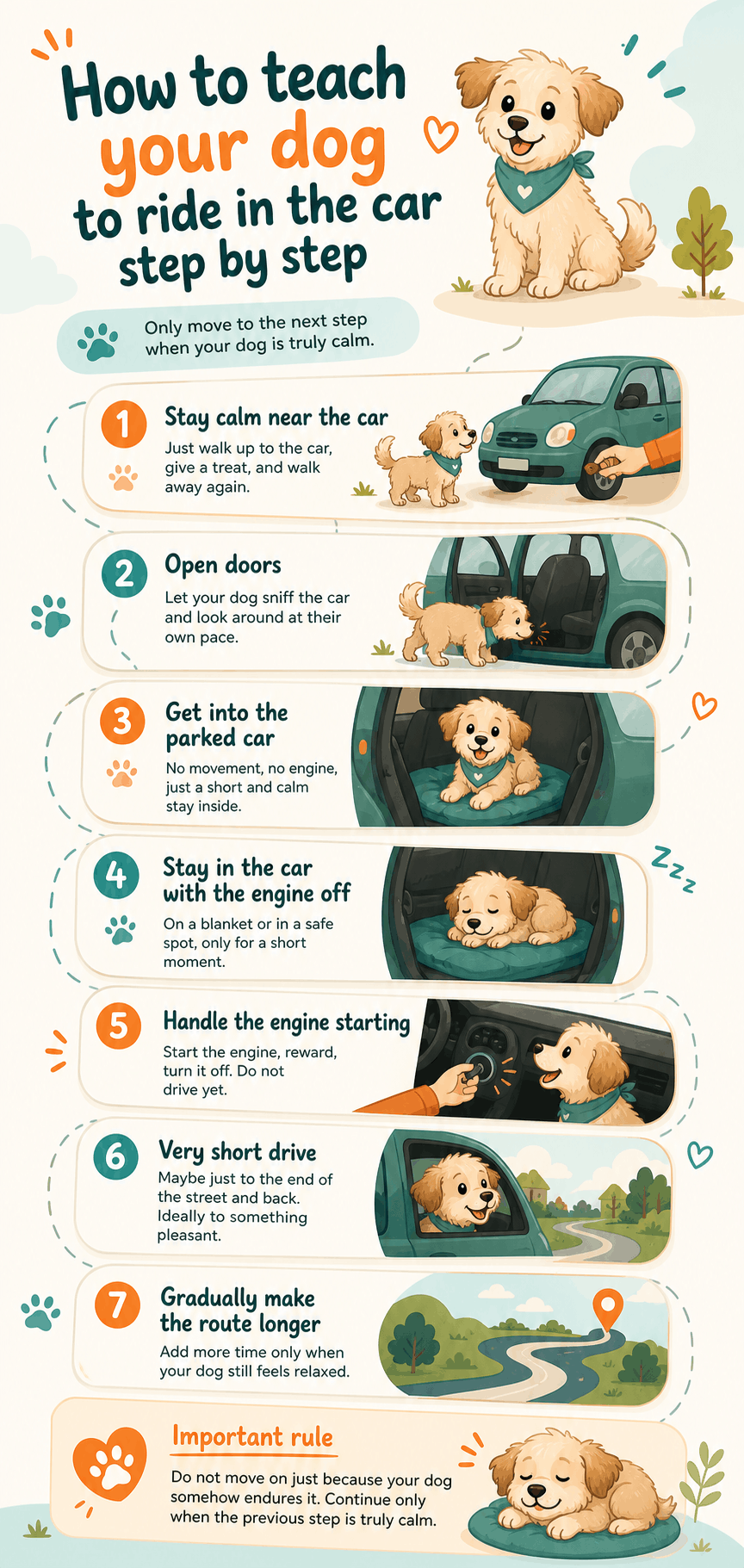
How to teach your dog to get used to the car step by step
If you want a simple plan, follow this order:
- The dog is calm near the car.
- The dog can handle open doors.
- The dog gets into the stationary car.
- The dog stays in the car with the engine off.
- The dog can handle the ignition.
- The dog can handle a very short ride.
- Gradually extend the trips.
Only move on to the next step when the previous one is genuinely calm. Not when the dog "just tolerates it."
What to do if your dog vomits in the car
A dog that vomits in the car mainly does not need more discipline. It needs to identify the cause and reduce the burden.
The following things often help:
- shorter routes,
- longer time between meals,
- fresh air and a cooler temperature in the car,
- safe and stable place in the crate or harness,
- stop immediately upon seeing the first signs of nausea,
- consultation with a veterinarian if the problem persists.
If your dog regularly feels sick in the car, it’s better to address it sooner rather than later. The longer it associates riding with motion sickness, the harder it will be to change its attitude toward the car.
Common mistakes that worsen fear of riding in the car
Some things we do with good intentions but don’t help the dog much.
Too rapid a pace
The dog is scared once, so we "must get it used to it." However, a long journey that it barely survived is usually not training. It’s another unpleasant experience.
The car only signals stress
If the dog only travels to unpleasant places, resistance will increase. This is why short trips to something enjoyable also make sense.
Punishing or upsetting the dog
A dog that trembles or vomits is not doing it on purpose. Punishing does not change its emotion. Instead, it adds more stress.
Too much comfort at the wrong moment
A calm voice and your presence are fine. But if the dog is panicking and you intensely reassure it that "it’s okay," you may unintentionally increase the tension. Much more helps calmness, simplicity, and lower demands.
Ignoring a health cause
A sudden aversion to the car, repeated vomiting, or a significant deterioration from earlier comfort deserves veterinary consultation.
When is it time to address the problem with a veterinarian or trainer?
Home training is not always enough. Seek professional help especially when:
- the dog repeatedly vomits or has diarrhea while riding,
- it becomes more afraid of the car,
- it panics when approaching the car,
- you need to travel by car often and the problem is limiting you,
- there’s a sudden change in behavior in an adult dog.
A veterinarian can help rule out a health cause and suggest appropriate procedures or medication for significant motion sickness or anxiety. Collaborating with a sensitive trainer or behaviorist can also be worthwhile for strong fear.
How Barkio can help
Not every dog relaxes and falls asleep right after a car ride. Some dogs need more time to calm down in a new environment, especially when traveling for a weekend getaway or a vacation.
That’s where Barkio can help. If your dog is resting in an apartment, cabin, or another room after arriving, you can check on them remotely and see whether they’ve truly settled down or are still feeling stressed. This can help you better understand how demanding the journey really was for your dog.

Frequently asked questions
1. How to teach my dog to get used to the car when it is afraid to even approach?
Start completely outside the ride. Reward the dog just for being calm near the car, then for open doors, and finally for getting in. If it stops eating or stiffens, step back one step.
2. What to do if my dog drools and vomits in the car?
The likely cause may be motion sickness in the dog. Shorter rides, a longer gap between meals, a cooler car, and consultation with a veterinarian, if the problem persists, help.
3. Is a crate or a harness better for the car?
It depends on the dog and the type of car, but generally, the dog needs a stable and securely defined space. This often helps many dogs psychologically as well as in terms of safety.
4. Should I pet and comfort my dog in the car?
Calm contact is fine, but do not try to drown out the stress with too much activity. It’s better to speak quietly, remain calm, and especially adjust the whole training so that the dog can handle it.
5. Why is my dog afraid of riding in the car even though it did not have a problem before?
It may be due to an unpleasant experience, worsened motion sickness, pain, or another health issue. In the case of a sudden change, it’s good to consider a veterinary examination.
6. Will it help if I take my dog for rides more often to get used to it?
Only if the rides are short, manageable, and associated with something enjoyable. Repeated long and stressful trips usually make the problem worse.
Conclusion
A dog in the car does not have to be a lifelong problem. Whether its resistance is due to fear, nausea, or a bad experience, in most cases, it helps to take a few steps back and start building new associations much more slowly.
By observing your dog’s signals, not pushing it, and associating the car with pleasant experiences, many dogs have a chance to learn to handle the ride much more calmly. And that is the goal: not to "overcome" the dog, but to help it feel safe in the car.