The dog chews furniture and destroys things: why and how to stop it
April 20, 2026

Katka
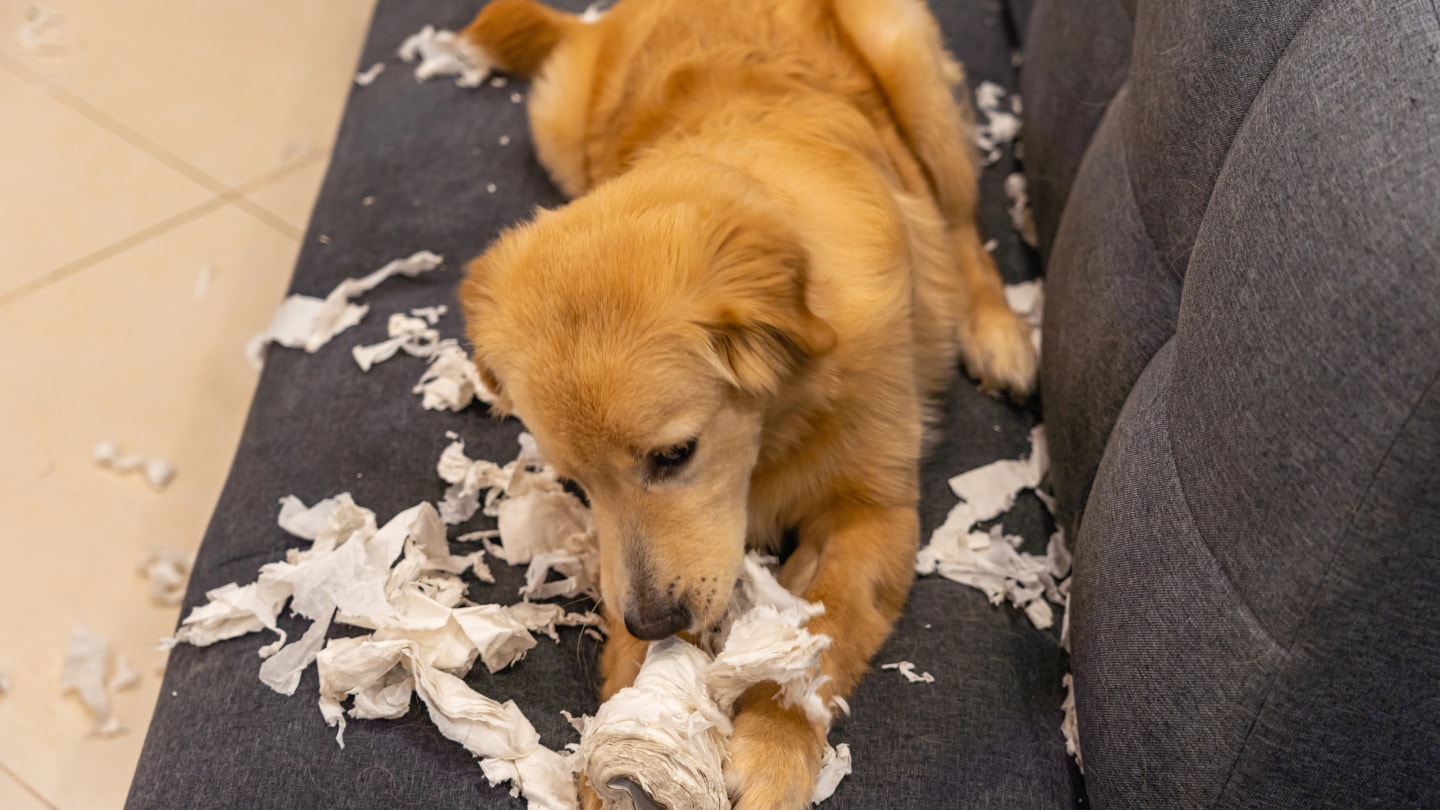
Chewed corner of the table, destroyed shoes, or gnawed couch. When a dog starts to destroy things at home, it can be hard to tell whether it's bored, stressed, or just needs something appropriate to chew on. Identifying the cause is the most important part.
Barkio can help with that. When you monitor your dog from afar, it's much easier to find out what's going on when you're not home—whether it starts destroying things right after you leave or only after a while out of boredom. Once you know why, you can choose a solution that really works much more effectively.

In this article, we will look at the most common reasons why a dog chews furniture and other things at home, and show how to teach it to stop calmly, clearly, and without unnecessary punishment.
Chewing is natural for dogs
It's good to remind ourselves of one important thing at the beginning. A dog does not need to completely stop chewing. The need to gnaw, nibble, and explore things with its mouth is natural. The goal is not to teach it to never chew anything but to not chew your furniture, shoes, and household items.
This is where the biggest difference lies between ineffective and effective solutions. When a person tries to prohibit everything, the dog often does not understand what it should do instead. However, when you offer a suitable alternative and simultaneously remove the cause of the problem, the change is usually much quicker.
Note: Dogs usually don’t destroy things to annoy you. They destroy them because they are compensating for something, relieving themselves, or keeping themselves entertained.
Why dogs chew furniture and things at home
At first glance, it may always look the same. The result is a chewed-up item. However, the reasons can vary greatly, and it is based on these that a solution stands.
The dog is teething
Chewing is completely normal in puppies. When baby teeth are exchanged for permanent ones, the gums can be sensitive, and chewing provides relief. Puppies are also just getting to know the world, so they test what is soft, what is hard, what moves, and what is easy to hold in their mouths.
This is why corners of furniture, slippers, blankets, or various small items left within reach often end up as "victims." It is not a sign of bad temperament or poor upbringing. It is a normal developmental stage that the owner needs to guide appropriately.
Typically, during this period, a puppy:
- picks up almost everything in its mouth,
- tries things it was not previously interested in,
- needs to nibble or chew more frequently.
The dog is bored
One of the most common reasons for older dogs is boredom. A dog that doesn't get enough exercise, stimulation, and activities will simply find its own program. And that can look exactly like starting to chew the table, tearing up its bed, or pulling out the stuffing from a pillow.
This is especially true for young, active, and intelligent dogs. Short walks around the house are often not enough for them. If they do not have the opportunity to expend energy and keep their minds occupied during the day, they bring their restlessness home.
The problem often lies in the fact that the dog lacks:
- longer and meaningful exercise,
- mental stimulation,
- regular activity throughout the day.
The dog is stressed
Another common cause is stress or tension. Some dogs destroy things mainly when they are left home alone. Others start to chew when they are overstimulated, have too many stimuli in their home, or do not know how to relax well.
“Sometimes it’s important to look at the destruction of things not as mischief but as a signal that the dog is struggling with something.”
The dog then does not chew because it is having fun, but because it is helping itself cope with discomfort. Chewing calms it down and relieves it for a while. That is why it is sometimes essential to look at the destruction of things not as "mischief" but as a signal that the dog is struggling with something.
Signs of stress may include when the dog:
- destroys things mainly after you leave,
- walks restlessly around the apartment,
- whines, barks, or looks for the door.
Bad habit
A dog can also simply get used to certain behaviors. Once it chews a corner of the sofa, finds it interesting, receives no better alternative, and eventually repeats it. The longer it goes on, the more entrenched the behavior becomes.
Therefore, it pays to not wait too long. What seems trivial today can be a firmly rooted habit in a few weeks.
How to determine the cause for your dog
Before you start correcting anything, it is worth stopping for a moment and looking at the situation in more detail. It is not enough to know that the dog is destroying things. It is important to find out when it does it, what exactly it destroys, and under what circumstances.
Focus mainly on these correlations:
- Does it only happen when the dog is home alone?
- Does it destroy things mainly in the evening or after a long period of calm?
- Does it chew everything within reach, or just certain things?
A dog that mainly destroys things after its owner leaves may have a problem with solitude. A dog that starts chewing furniture in the evening may simply be unexercised. And a puppy that picks up everything it finds is very likely going through a teething phase.
If you are unsure what your dog is actually doing after you leave, the Barkio app can help. With live images, sound, and alerts, you can easily find out:
- when the problem starts,
- how the dog reacts after the door closes,
- whether it is bored at home or stressed.
When you know what is truly happening, it’s easier to find a solution.
How to teach the dog not to chew furniture and other things
Once you know why the dog is destroying things, you can start with specific steps. There is no one universal solution for all dogs, but in most cases, a combination of prevention, suitable alternatives, and working with the daily routine will help. It also highly depends on whether the dog mainly destroys things when alone, out of boredom, or has already gotten used to such behavior.
When the dog destroys things alone
If the dog mainly destroys things after you leave, you need to tailor the solution to what is behind that. If it is mainly boredom, more exercise and mental activity before departure will help. If it is stressed, a calm and gradual training of solitude can be more important.
These can help mainly:
- tire the dog out with a walk or sniffing game before leaving,
- keep items it usually destroys out of reach,
- provide it with a safe chewing alternative,
- if stressed, shorten the time alone and gradually extend it.
It's important not to start with too long departures if the dog cannot handle them. The more often it is put in a situation it cannot handle, the harder it becomes to change the problem. If you suspect that the destruction of things is more due to stress from being alone than boredom, a more detailed guide to dogs' separation anxiety may be helpful.
When the dog chews furniture
If the dog has a favorite piece of furniture, start with a combination of prevention and redirection. First, minimize access to the place it chews as much as possible. Sometimes it helps to rearrange the space, other times temporarily closing the doors to part of the apartment.
At the same time, offer it something it can chew instead. If you only take something away from the dog without offering a replacement, it will often find another prohibited item. But if it receives a safe and engaging alternative, it has a much better chance to learn the right choice.
Examples of useful actions include:
- offering a chew toy when the dog is restless,
- limiting access to a specific piece of furniture,
- engaging the dog before it starts searching for its own entertainment.
When the dog chews shoes, blankets, and other items
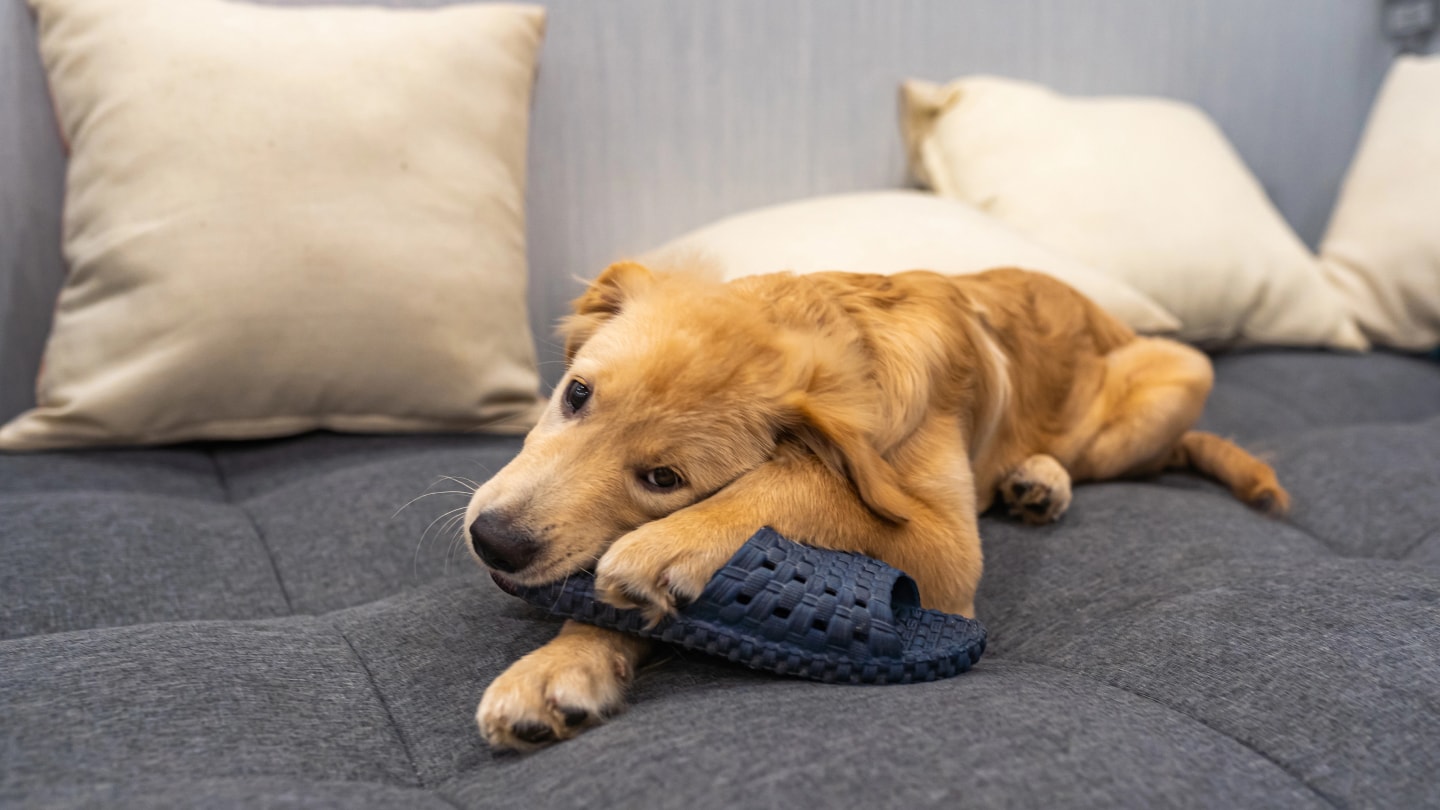
Shoes, socks, blankets, or pillows tend to be exceptionally appealing to dogs. They carry the scent of a person, are easily picked up in their mouths, and are easy to manipulate. This is why many dogs prefer them much earlier than their toys.
In this situation, consistency becomes very important. It is not just about admonishing the dog but also about adjusting the home environment so that these items are not constantly within reach. If the dog finds something interesting on the floor every day, learning not to touch it becomes very difficult.
It is important to:
- clean up appealing items out of reach,
- provide the dog with its own chewing aids,
- be consistent about what is its and what is not.
Warning: Avoid the common mistake of giving the dog an old shoe or sock to play with. The dog then usually does not distinguish between old and new items.
What helps in most cases
In most cases, there is no magical one-stop solution. Instead, a combination of several simple steps that make sense together is more effective.
Offer appropriate chewing items
A dog needs a legal way to fulfill its chewing need. Durable toys, safe chewing items, or appropriate treats to keep it occupied for a longer time can help.
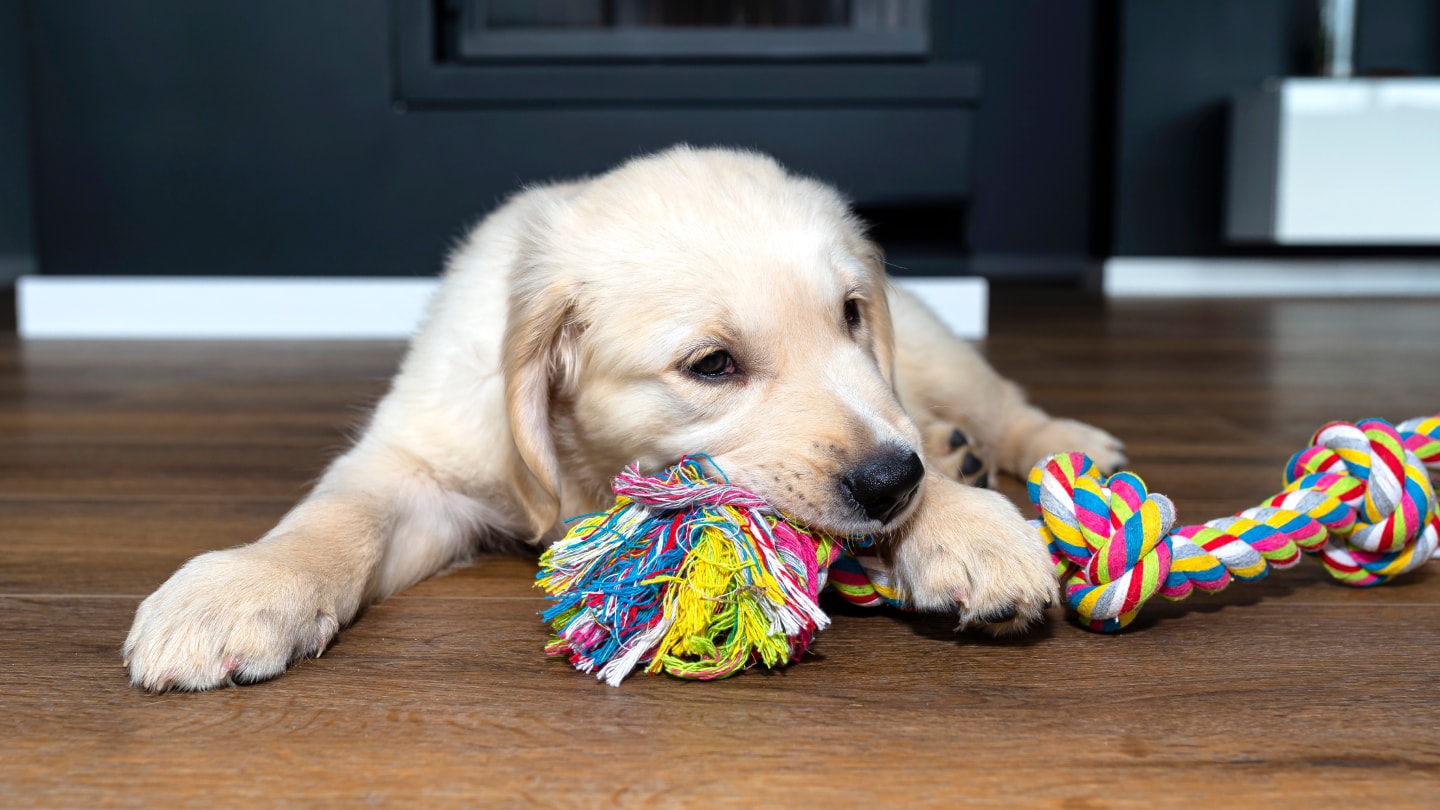 It is important that they are attractive enough for it. If they are less interesting than a table leg, it will not stay with them for long.
Adjust the household to minimize opportunities
At the start, it's perfectly okay to help the dog a little. Hiding shoes, securing cables, clearing blankets out of reach, or closing doors to rooms is not a failure in upbringing.
It's a practical part of the solution. Each successful destruction reinforces the behavior.
Focus on both physical and mental activity
Many dogs need not only a longer walk but also mental engagement. Short training, sniffing games, or simple tasks can make a big difference. A dog that is pleasantly tired both physically and mentally will often rest much more at home.
The most effective combination is:
- exercise,
- sniffing,
- short training sessions,
- calm periods after activity.
Respond promptly, not reactively
If you catch the dog preparing to chew an inappropriate item, gently redirect it. However, if you find the damage only later, punishment usually does not help at all. The dog will not connect it with the previous behavior and may only become more nervous.
Most common mistakes that worsen the problem
Some things owners do automatically, but the result is often the opposite.
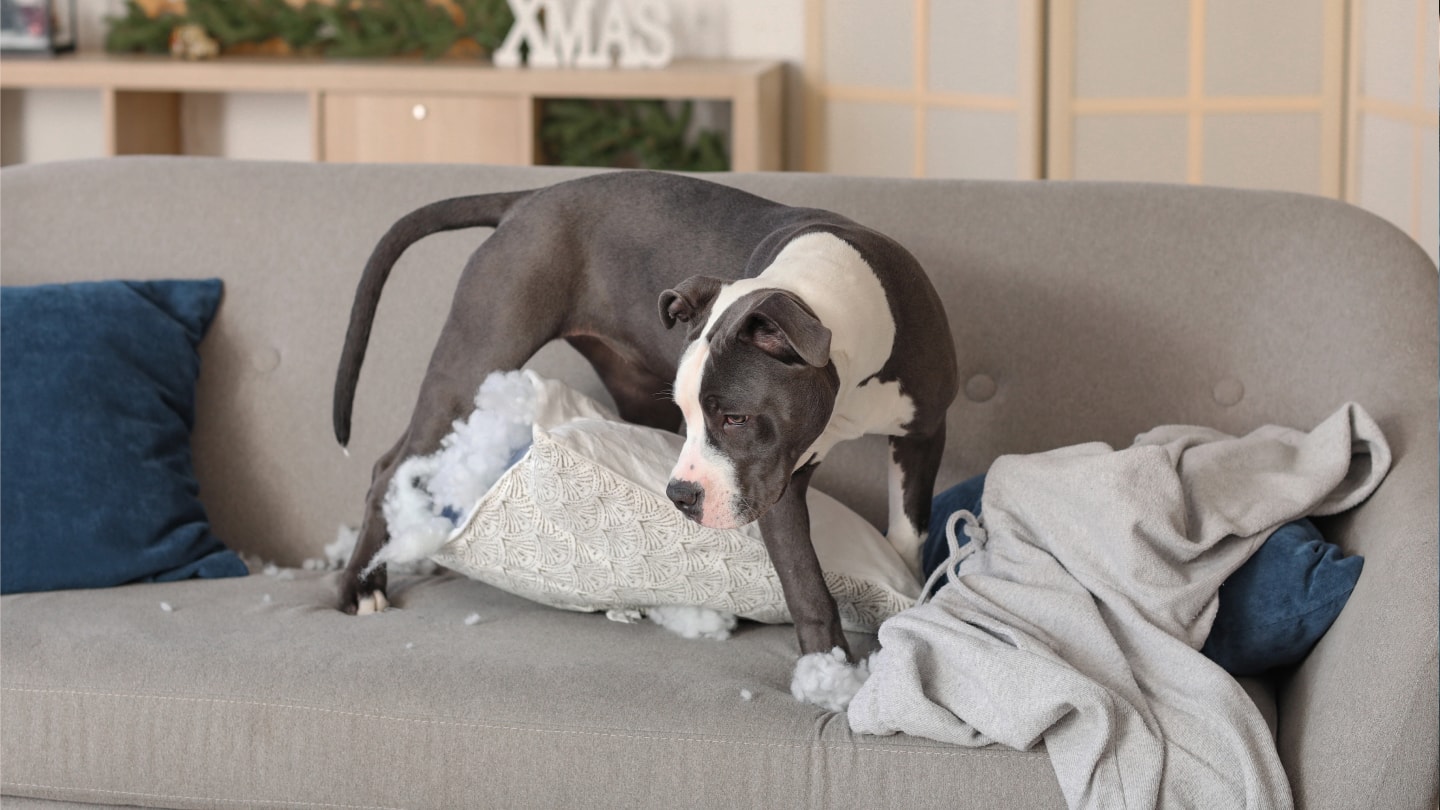
A common mistake is reacting with punishment after-the-fact. A person comes home, sees the damage, and reacts emotionally. This is understandable, but the dog usually does not grasp what exactly it is being reprimanded for. Another common mistake is underestimating boredom and mental stimulation. Sometimes the dog does not need "more prohibitions," but more options for reasonably using its energy.
The problem is often exacerbated by inconsistency. One day you clean up the shoes, the next day they remain on the floor, once the dog gets an old sock to play with, and the next time it’s scolded for playing with it. The less clear the situation is for the dog, the slower it learns.
The most common factors that worsen the situation include:
- reactive punishment,
- insufficient exercise and mental activity,
- clutter and easily accessible "prey,"
- inconsistency in rules.
When it is good to seek professional help
Sometimes just minor adjustments to the routine and environment can make the situation improve quickly. However, it may also make sense to seek help sooner. This is especially true if the dog is destroying things very intensely, injuring itself in the process, exhibiting strong barking, panic, or other signs of significant stress.
In such cases, the problem may be deeper, and it is better to work with it purposefully. The sooner the cause is accurately identified, the easier it is to look for a way out.
What to focus on first
If you want to take away just a few basic things from the whole article, start here:
- try to find out when and under what circumstances the dog destroys things,
- offer it suitable and attractive alternatives for chewing,
- limit access to the things it regularly destroys,
- add exercise and mental activity,
- and if you are not sure what happens during solitude, monitor it from a distance.
It is the combination of these steps that is often the most effective in practice.
Conclusion
A dog that chews furniture and destroys things at home is usually not punishing you or misbehaving on purpose. In most cases, it simply does not know how to cope with boredom, tension, teething, or has poorly learned what is its in the home and what is not. Once you understand the cause, you can start addressing the problem much more calmly and effectively.
Sometimes more exercise helps, other times better chewing alternatives, and sometimes working on solitude. And if you are unsure what exactly happens at home when you are not present, Barkio can help you gain a clearer picture. Knowing when the problem begins and what it looks like makes the first step toward correction much easier.